
Case Study: Designing a Holiday Let That Feels Like a Holiday
A holiday let design example from Yorkshire, designed to create a relaxed, memorable guest experience
What makes someone choose one holiday let over another?
Often, it isn’t simply the number of bedrooms, the size of the kitchen or even the location.
It’s the feeling they get when they see it.
They imagine themselves waking up slowly, drinking coffee outside, reading a book in the afternoon and enjoying a glass of wine as the sun goes down.
That emotional connection is incredibly powerful in short-term rental design.
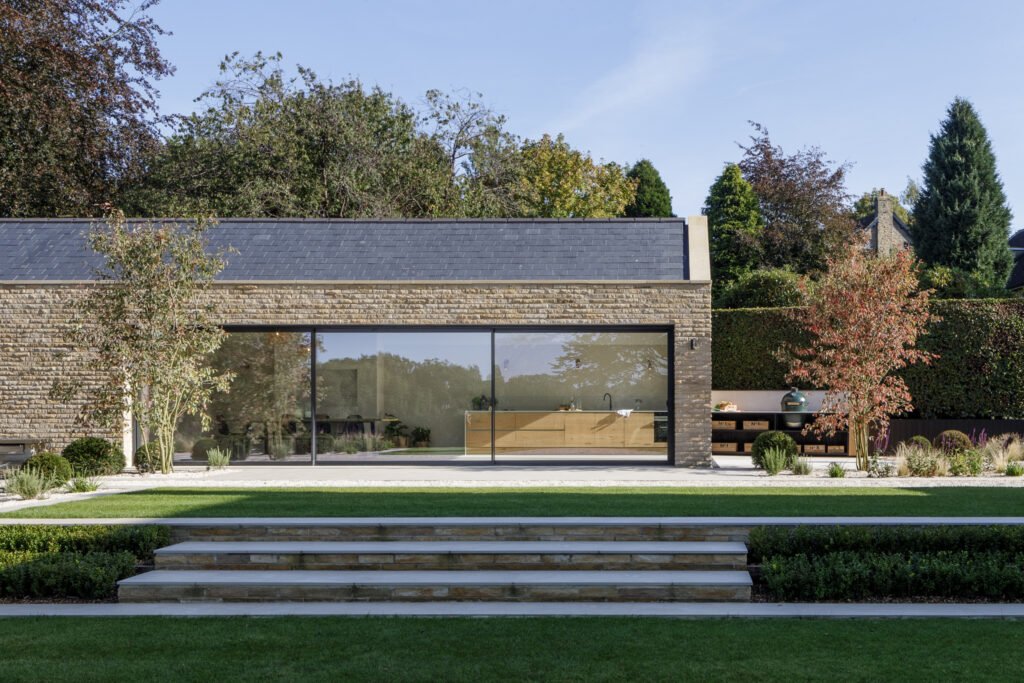
For this project, The Well Home was asked to design a new-build summer house within the garden of a family home. The brief was simple but very specific: create a space with a genuine holiday feel that would allow the owners and their guests to enjoy the experience of being away without actually leaving home.
It became an exercise in designing not just a beautiful interior, but an experience.
The Brief: Create a Holiday Feeling at Home
The summer house needed to feel distinctly different from the main family home.
It wasn’t intended to be another everyday living space. It needed to feel like an escape.
The design therefore focused on creating a relaxed, informal atmosphere inspired by the feeling of being on holiday.
Rather than following a traditional holiday-let aesthetic, we considered what makes a great holiday memorable:
- A sense of escape
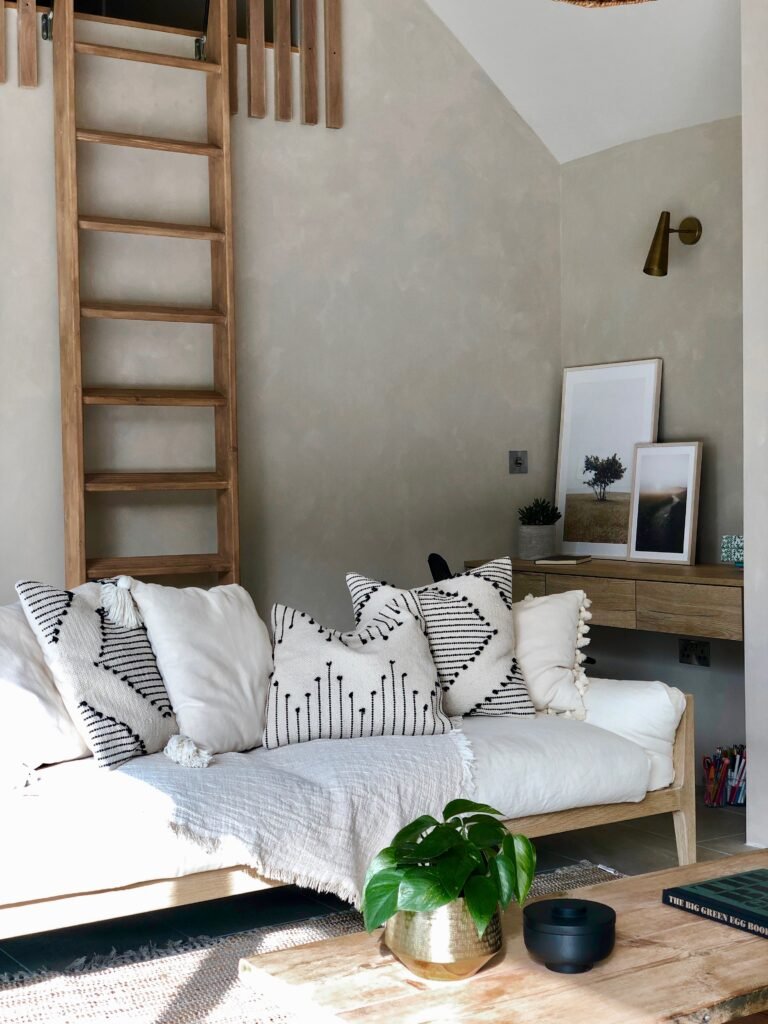
- Comfortable places to relax
- Connection with the garden
- Natural light
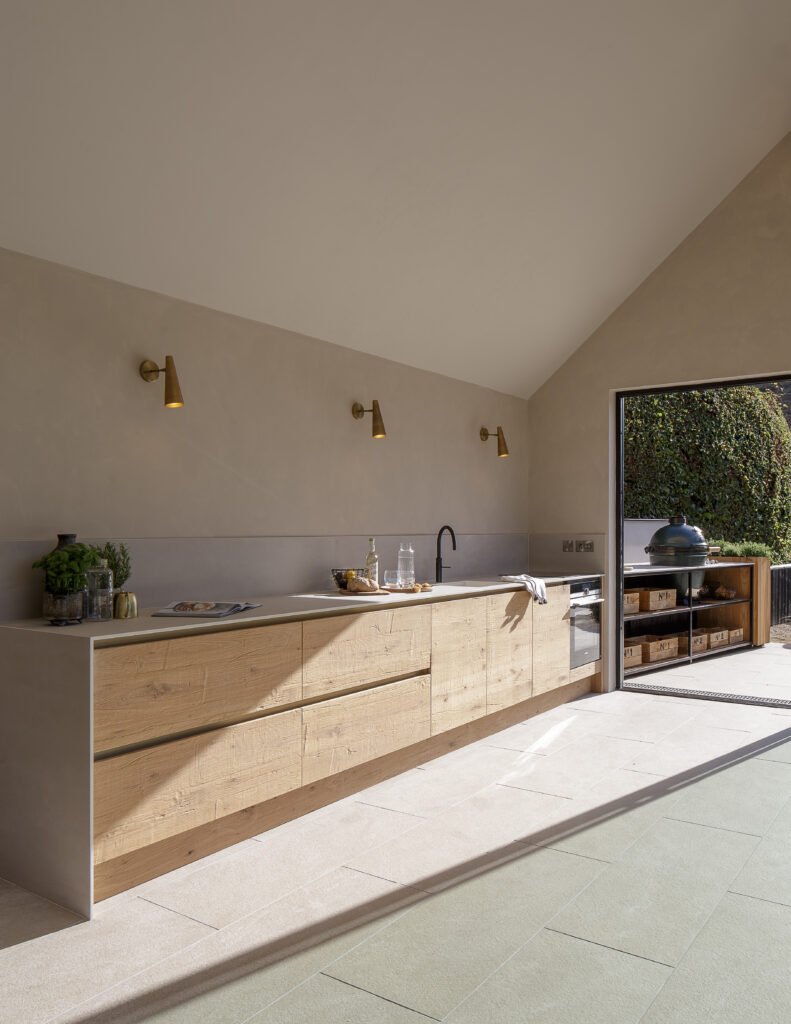
- Easy indoor-outdoor living
- Beautiful but uncomplicated surroundings
- Spaces that encourage people to slow down
These principles became the foundation for the design.
Designing Around the Experience
A successful holiday let should be designed around how guests will actually use it.
For this project, the summer house needed to support different moments throughout the day.
Morning coffee.
Lazy lunches.
Reading in the afternoon.
Relaxing together in the evening.
The layout was therefore planned around flexibility, comfort and connection.
Rather than filling the space with furniture, we created clearly defined areas that allowed the room to breathe while still feeling inviting.
This is an important principle in any holiday let design example: the best interiors don’t simply look good in photographs. They make it easy for guests to imagine themselves living there.
Creating a Sense of Escape Through Colour
Colour played an important role in creating the holiday atmosphere.
The palette was carefully considered to feel relaxed, light and uplifting without becoming overly themed.
Instead of relying on obvious coastal or tropical references, the design used colour and texture more subtly to create the feeling of being somewhere else.
This is particularly important for holiday properties.
A successful interior should feel distinctive enough to be memorable, but timeless enough that guests won’t feel they’ve walked into a trend that will date quickly.
Bringing the Outside In
The relationship between the summer house and the surrounding garden was central to the design.
Natural light and views were treated as part of the interior rather than something separate from it.
Furniture was positioned to make the most of the outlook, while materials, colours and textures helped reinforce the connection with the garden.
This approach is particularly effective for properties in Yorkshire and the Lake District, where the landscape is often one of the property’s greatest assets.
The design should enhance the setting rather than compete with it.
Designing for Comfort
A beautiful holiday property isn’t enough.
Guests need to feel comfortable almost immediately.
Furniture was therefore selected not only for appearance but for how it would feel to use.
Comfortable seating, soft textiles and considered lighting all contribute to an environment where guests naturally want to stay longer.
This is where our wellness-led approach to design becomes particularly valuable.
We consider how a space affects the senses and how design can support relaxation, rest and wellbeing.
Guests may not consciously identify why a room feels good.
They simply know that it does.
Lighting That Changes With the Day
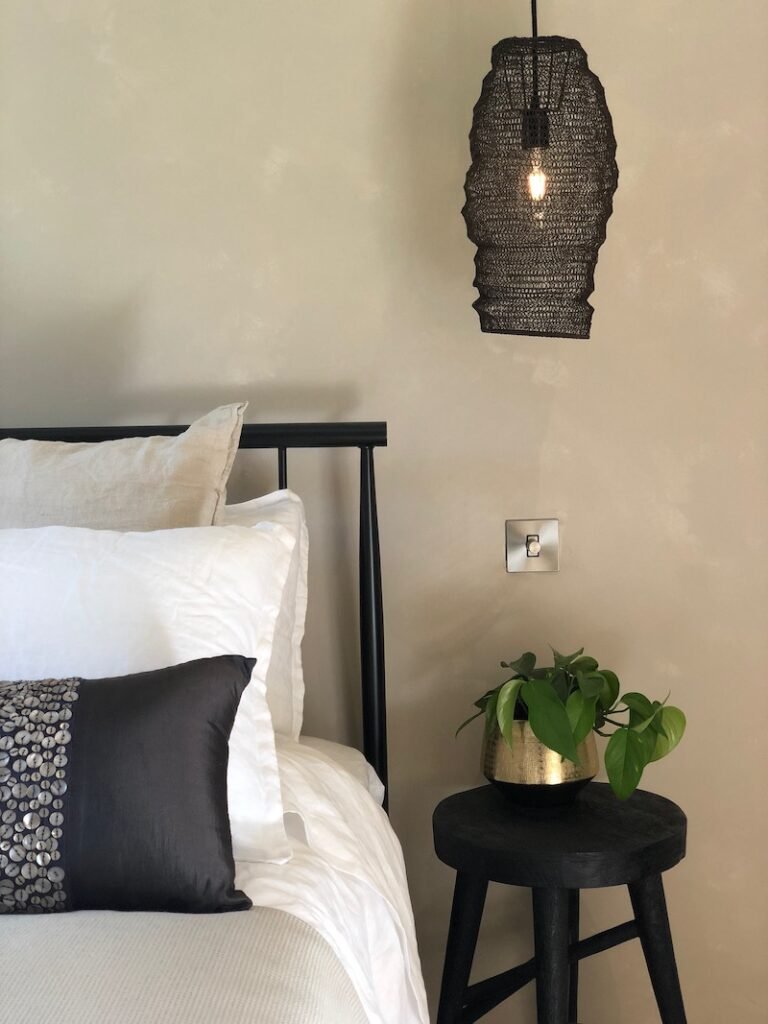
Lighting was another important part of creating the right atmosphere.
A successful holiday interior needs to work at different times of day.
Bright, natural light supports mornings and daytime activities, while warmer, layered lighting creates a more intimate atmosphere in the evening.
Rather than relying on a single central light source, the design incorporates different levels of illumination to allow the atmosphere to change throughout the day.
For a holiday property, this is particularly important because guests often spend considerably more time indoors than they would at home.
The Details Guests Remember
Five-star experiences rarely come from one spectacular feature.
They are usually created through lots of small decisions that make a property feel thoughtful.
That might mean:
- Comfortable seating in exactly the right place
- Lighting beside a chair for evening reading
- Easy access to the garden
- Somewhere to put down a drink
- Soft textures that make the space feel inviting
- A layout that feels effortless to navigate
These details may seem small, but they contribute to the overall impression guests take away from the property.
And that impression is what ultimately becomes a review.
Designing for Photography as Well as Real Life
A holiday let has two audiences.
The first is the person scrolling through the listing.
The second is the guest who eventually walks through the door.
The design needs to work for both.
Strong focal points, natural light, considered styling and a clear sense of space help the property photograph beautifully.
But those features should never come at the expense of comfort or practicality.
The best holiday-let interiors are photogenic because they are genuinely well designed, rather than designed simply to create an Instagram moment.
What Makes This Design Commercially Valuable?
Although this project was created as a summer house rather than a traditional Airbnb, the principles are directly transferable to successful short-term rental design.
The same fundamentals apply:
Create an emotional connection.
Give potential guests a reason to choose your property.
Make the experience memorable.
Give them something to talk about after they leave.
Design for comfort.
A beautiful photograph might secure the booking, but comfort contributes to the review.
Create a sense of place.
Use the property’s surroundings as part of the experience.
Design every detail intentionally.
The little things often make the biggest difference.
The Well Home Approach to Holiday Let Design
This project demonstrates something central to our approach to holiday let interiors.
We don’t believe successful short-term rental design is simply about making a property look expensive.
It’s about creating a feeling.
Guests book on feeling.
They leave reviews on how they slept, how comfortable they felt, how easy the property was to use and how much they enjoyed being there.
That is why our holiday let design service combines commercial thinking with our wellness-led design approach.
We consider how light, materials, colour, acoustics, comfort, layout and sensory details work together to create a better experience.
Because when guests feel good in a property, they’re more likely to remember it, recommend it and return.
Could Your Holiday Let Perform Better?
Whether you’re creating a new Airbnb, converting a barn or cottage, or renovating an existing holiday let, the right design can become one of your property’s greatest commercial assets.
The objective isn’t simply to create somewhere guests want to stay.
It’s to create somewhere they can’t wait to tell other people about.
At The Well Home, we design holiday lets across Yorkshire and the Lake District that are thoughtfully considered around the guest experience, designed to stand out online and created to support stronger bookings, higher perceived value and five-star reviews.
If you’re planning a holiday let project and want to create a property that guests remember for all the right reasons, get in touch to discuss your project.