
Holiday Let Styling Management: Why Furnishing Isn’t Enough
Styled holiday let management is an ongoing service that keeps a short-term rental’s interior current after launch – through seasonal refreshes, proactive replacement of worn items, and photography updates – because a listing’s styling naturally degrades over time even when nothing has visibly “broken.”
If you’ve read our previous posts on holiday let design, you’ll know the headline by now: design gets you booked. But there’s a follow-up question most hosts don’t ask until it’s too late – what happens after launch day?
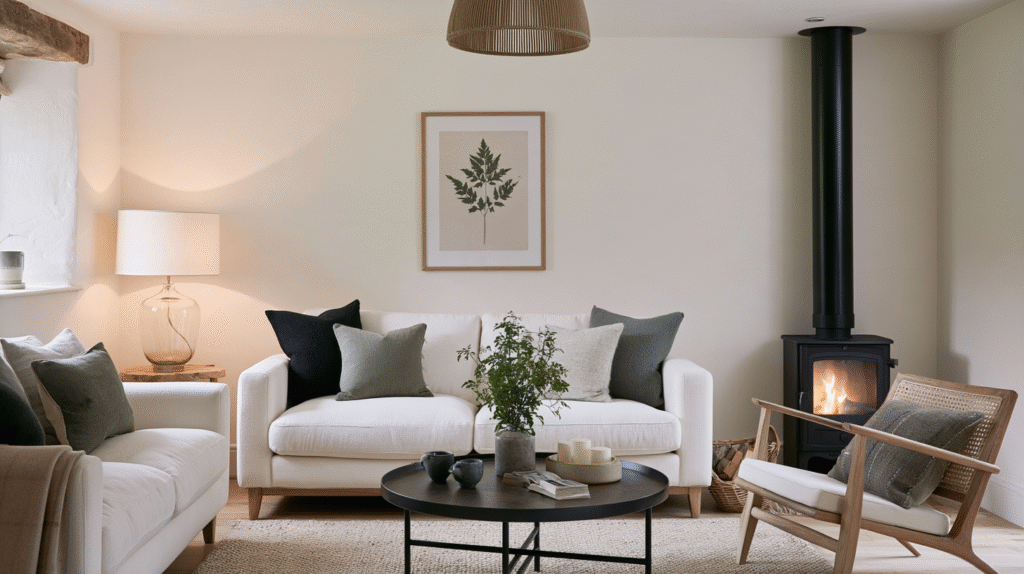
The gap between “furnished” and “managed”
A beautifully furnished holiday let on opening day is not the same thing as a high-performing holiday let eighteen months in. Soft furnishings fade. Trends move on. A colour palette that felt fresh at launch can start to look dated against newer competitors in the same search results – and guests notice, even if they can’t say exactly why.
The properties that keep outperforming aren’t the ones with the biggest initial spend. They’re the ones someone is still actively looking after.
We covered the initial fit-out process in What Does an Airbnb Interior Design Service Include? and the booking impact of good design in Increase Your Airbnb Bookings Through Design-Led Interiors. This post picks up where those leave off: what happens in year two, three and beyond.
Why styling decays even when nothing is “broken”
A few forces work against every holiday let, regardless of how well it was designed at launch:
- Physical wear. Cushions flatten, throws pill, upholstery fades from sun exposure – none of it dramatic enough to trigger a replacement decision on its own, but cumulatively very visible in photos.
- Photo fatigue. The same listing photos, unchanged for two years, start to look stale to repeat browsers of a local market – even guests who’ve never stayed before can sense a listing hasn’t been refreshed.
- Competitive drift. New entrants to the local market are launching with current trends and fresh photography. A static listing isn’t standing still – relative to the market, it’s falling behind
- Seasonal mismatch. A property styled and photographed in summer can look wrong, or simply less appealing, in winter search results if nothing has been adapted.
What ongoing styling management actually covers
A managed styling tier typically includes:
- Seasonal refreshes – soft furnishing and styling updates aligned to the season, keeping the property feeling current in every set of listing photos
- Proactive replacement – wear and damage addressed before it shows up in a guest review, not after
- Photography updates – refreshed imagery on a regular cycle, so the listing never looks static
- Ongoing market awareness – styling decisions informed by what’s converting in comparable local listings, not guesswork
- A single point of contact – one designer who already knows the property, rather than re-briefing someone from scratch every time
The financial case
A tired-looking listing doesn’t just lose bookings outright, it quietly erodes nightly rate. Guests comparing near-identical properties will pay more for the one that looks current. A managed styling retainer is designed to protect that rate, not just maintain appearances.
Think of it in the same terms as maintaining a car versus waiting for it to break down: the ongoing cost is smaller and more predictable than the eventual cost of neglect, and it avoids the sharpest cost of all, a run of average reviews that takes months of good ones to recover from.
Who this is for
This tier suits hosts with one or several properties who don’t have the time, eye, or inclination to manage refreshes themselves, and who’d rather this be handled by someone who already understands what converts bookings in the Yorkshire and Lake District market. It’s a natural next step for anyone who worked with us (or another designer) on an initial fit-out and wants that investment actively protected rather than left to fade.
For hosts managing several properties, it also solves a coordination problem: instead of every property drifting at a different rate and needing attention reactively, a retainer keeps the whole portfolio on a consistent, planned refresh cycle.
Frequently asked questions
How often does a holiday let need restyling? Most properties benefit from a meaningful refresh every 6–12 months, with smaller seasonal touches in between, the exact cadence depends on guest turnover, wear patterns and how competitive the local listing market is.
Is styling management only for multi-property hosts? No. Single-property hosts benefit just as much, particularly if the property is a significant income source and protecting nightly rate matters. Multi-property hosts simply see an added benefit from consistency across a portfolio.
Does restyling mean new furniture every time? Not usually. Most refreshes involve soft furnishings, accessories, and styling adjustments rather than replacing core furniture, which keeps costs proportionate while still keeping photography and in-person impressions current.
How is this different from just hiring a cleaner or property manager to “tidy up”? A cleaner or property manager maintains the property day-to-day; a styling management retainer makes design decisions – what to update, when, and why – based on guest experience and market positioning, not just cleanliness.